Resources

Overview

Explore our tools and information for survivors, service providers, and advocates on the intersection of intimate partner violence and brain injury. Find educational materials, videos, downloadable resources, and local clinic links to raise awareness and support healing. Dive into the sections below for what you need.

Survivors

This section provides compassionate resources for survivors of intimate partner violence who may be experiencing brain injury symptoms.

The Ohio Domestic Violence Network’s Brain Injury Information for Survivors page explains how head injuries and strangulation in abusive relationships can cause serious, often overlooked brain injuries. It guides survivors on recognizing symptoms, understanding risks, and knowing when to seek medical care, while emphasizing safety, support, and the possibility of healing and rebuilding life after trauma.

Healing from Trauma is a site by trauma and resiliency coach Kerri Walker, focused on educating, supporting, and advocating for people healing from trauma, including intimate partner violence and traumatic brain injury. Its goal is to offer trauma‑informed coaching, share survivor-centered resources, and build awareness through podcasts, articles, and community collaboration.

Paula D. Walters’ site, The Courageous Survivor, shares her work as a speaker, consultant, and survivor advocating for trauma awareness and holistic healing. It highlights her journey through abuse, strangulation-related TBI, and recovery, and her mission to inspire systemic change by helping others understand the full impact of trauma and the hope found in healing.

The Pathways Program at Swedish Hospital (Endeavor Health) provides free, confidential support for people impacted by gender‑based violence, including domestic violence, human trafficking, and sexual assault. It offers bedside crisis intervention, safety planning, trauma therapy, advocacy, support groups, and connections to trauma‑informed providers, all aimed at helping survivors access care, heal, and rebuild with dignity.

The Illinois Department of Human Services page outlines the state’s Domestic Violence Prevention and Intervention program, which provides free, confidential services to anyone experiencing domestic violence. It explains available supports—such as 24/7 crisis hotlines, safety planning, legal advocacy, counseling, children’s services, emergency shelter, and education—aimed at increasing safety, connecting survivors to resources, and helping them rebuild stability.

The City of Chicago’s Division on Gender‑Based Violence focuses on improving the safety and well‑being of survivors and their children by coordinating a citywide network of services. It connects people to counseling, legal advocacy, supervised visitation, shelter, and housing, while also working with partners to strengthen awareness, screening, and response to domestic and gender‑based violence.

The Illinois Coalition Against Domestic Violence’s Get Help page connects survivors to 24/7 confidential support, including the Illinois Domestic Violence Hotline, local service providers, and national hotlines. It explains how to find nearby agencies, what advocates can help with—like safety planning, legal information, and shelter referrals—and offers additional resources on recognizing abuse, tech safety, and accessing virtual legal clinics.

WINGS Program is Illinois’ largest domestic‑violence service provider, offering safe housing, counseling, and long‑term support to adults and children escaping abuse. Its mission is to help survivors build independence through shelter, integrated services, education, and advocacy, while also engaging the community to break the cycle of domestic violence.

The Brain Injury Association of Illinois page explains that it is the state’s only nonprofit dedicated to supporting people with traumatic and acquired brain injuries, along with their families and care providers. It offers an information and resource center, education, support groups, advocacy, prevention programs, and therapeutic camps, all aimed at improving quality of life and building a safer, more informed future for those affected.

This page lists Chicago and Illinois domestic‑violence agencies so survivors and providers can quickly find reputable, trauma‑informed services. It links to shelters, counseling programs, legal advocacy, hotlines, and statewide organizations, making it easier for people to access safety, support, and coordinated care.

Building Beyond Violence and Abuse provides free, confidential services for people experiencing domestic violence, including counseling, advocacy, emergency shelter, and community education. Its mission is to help survivors rebuild safety and independence while engaging the broader community in prevention, compassion, and long‑term change.

Connections for Abused Women and their Children (CAWC) is a Chicago nonprofit that provides immediate safety and long‑term support for people experiencing domestic violence, including shelter, counseling, legal advocacy, and a 24‑hour hotline. Its mission is to end domestic violence through survivor‑centered services, empowerment, education, and community‑wide advocacy.

The VA’s Intimate Partner Violence Assistance Program supports Veterans, their partners, and VA staff who may be experiencing or using IPV, offering education, safety support, and connections to trained coordinators. It aims to build healthier relationships through trauma‑informed services, resources, and access to both VA and community‑based help.

Family and Friends of Survivors

This section provides resources for families and friends of survivors.

DAIS’s Help a Loved One page explains how to support someone who may be experiencing domestic violence, emphasizing that abuse is never the victim’s fault and that safety and compassion matter most. It offers clear guidance on warning signs, healthy ways to approach the conversation, and access to a 24/7 help line for anyone seeking advice or support.

This page from Safe and Equal offers a clear, practical guide to help family, friends, and neighbors support someone who may be experiencing family violence. It explains how to recognize warning signs, approach conversations safely and respectfully, and connect someone to appropriate support services, all with an emphasis on empathy, safety, and non‑judgment.

The Joyful Heart Foundation’s resource page offers guidance for family, friends, and supporters of someone experiencing domestic violence. It focuses on how to listen without judgment, respond with empathy, and encourage safety while connecting survivors to supportive, trauma‑informed help.

This page provides a directory of Chicago and Illinois domestic‑violence agencies, helping survivors and supporters quickly find trauma‑informed services. It links to shelters, counseling programs, legal advocacy, hotlines, and statewide organizations so people can access safety, support, and coordinated care.

Building Beyond Violence and Abuse provides free, confidential support for people experiencing domestic violence, including counseling, advocacy, emergency shelter, and community education. Its mission is to help survivors find safety, rebuild stability, and create long‑term independence while engaging the community in prevention and healing.

The VA’s Intimate Partner Violence Assistance Program (IPVAP) is designed to support Veterans, their partners, and even VA staff who may be experiencing or using intimate partner violence. Its focus is on safety, trauma‑informed care, and helping people build healthier relationships.

Service Providers to Survivors

This section provides resources for service providers to survivors.

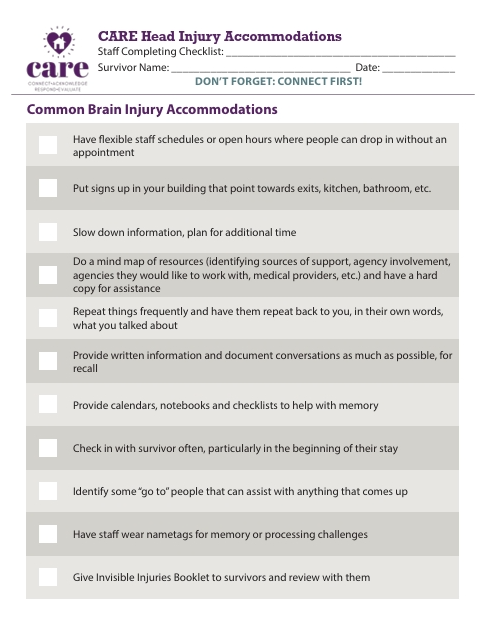
This PDF from the Ohio Domestic Violence Network is a practical, trauma‑informed guide to accommodating survivors who may have a traumatic or acquired brain injury, especially in shelter or advocacy settings. It breaks down the common challenges survivors may experience and pairs each with concrete, actionable accommodations staff can use to support safety, connection, and daily functioning.

This PDF lays out one of the most comprehensive frameworks for understanding and responding to partner‑inflicted brain injury within domestic‑violence programs. It explains how blows to the head, strangulation, suffocation, and other assaults can cause traumatic or acquired brain injuries—and how these injuries often go unrecognized, misinterpreted, or untreated.

The CHATS Advocate Guide is a practical tool designed to help domestic‑violence advocates recognize possible head trauma or strangulation injuries and adjust services so survivors can participate safely and fully. It combines gentle screening questions with concrete accommodations, making it easier for programs to support survivors who may be living with the physical, emotional, or cognitive effects of brain injury.

This page is a directory of Chicago and Illinois domestic‑violence agencies, created to help survivors, families, and service providers quickly locate trauma‑informed support across the state. It brings together emergency shelters, counseling programs, legal‑advocacy services, statewide coalitions, and crisis hotlines so people can find safety and coordinated care without having to search multiple sources.

Educational Materials

These pdfs are available for download or to order hard copies.  
Head Injury Education Card – A Bookmark Style Card For Survivors 

PDF in English or Español

CHATS – A Tool to Identify Brain Injury For Providers


PDF in English or Español

CARE – Head Injury Accommodations


PDF in English

Need a hard copy of the materials?

Videos

This collection of videos explores the impact of brain injury within abusive relationships and highlights the challenges survivors face. It also shares practical insights for healing, safety, and informed support.

The Intersection of Domestic Violence and Brain Injury: An Introduction

This video is an introduction to the intersection between domestic violence and brain injury. It starts by discussing the consequences of traumatic brain injury and strangulation on the brain and how it results in symptoms. Next it discusses the available data on the incidence of brain injury in survivors of domestic violence and its consequences, especially as it relates to obtaining safety and health services. Lastly, it provides recommendations on accommodations that should be considered to optimize interactions with survivors. This video can be used as a training tool and is currently being implemented in 40-hour trainings at local organizations.

The Intersection of Domestic Violence and Brain Injury: An Introduction

A presentation at the Brain Injury Association of Illinois Conference. October, 2022.

This is the channel for Kerri Walker’s podcast Invisible Wounds: Healing From Trauma, information on Intimate Partner Violence, and Traumatic Brain Injury! In this channel are episodes that look at various aspects of trauma, and how to heal from them! You’ll also examine different dynamics of abusive relationships and how to get out of them safely! Kerri will also talk about brain injury as a result of being in an abusive relationship and how it impacts us: It’s much more common than you think! Kerri is a survivor of all of it, and you are too! Join her to learn, grow, and heal together!

Podcasts

Listen to us talk. Its free!

Dr. Kozlowski was invited to participate in a podcast with Sarah’s Inn for their Domestic Violence Month Rally in October, 2023.

asd

Tab1


If you would like to speak to someone about brain injury contact:

  • Brain Injury Association of Illinois
    • Call: (312) 726-5699 or toll free 1 (800) 699-6443.
    • Email: info@biail.org
  • Concussion Legacy Foundation HelpLine Online Request Form
Skip to content